

Menin Inhibitors: A Promising New Therapy
As parents, we fight tirelessly to protect our children, especially when faced with a daunting illness like cancer. The diagnosis can be overwhelming, leaving you with countless questions about treatment options. Today, we want to explore a promising new avenue in childhood cancer research: Menin Inhibitors.
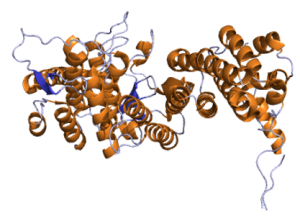
Understanding Menin
Imagine your child’s cells as a tightly regulated factory. Inside, proteins act like tiny machines, each with a specific function. Menin is classified as a tumor suppressor protein. Its primary job is to regulate cell growth and division, ensuring they happen at a controlled rate. It acts like a conductor within the cell’s nucleus, the control center, overseeing various processes related to cell growth. However, in some childhood cancers, particularly leukemias with gene mutations like *KMT2A and *NPM1, the “instructions” for cell growth become corrupted. These mutations act like faulty blueprints, causing cells to multiply uncontrollably. Here’s where menin becomes a double-edged sword. Menin interacts with these mutated proteins, further fueling the cancer’s growth.
Menin Inhibitors are a targeted therapeutic approach. These drugs act like molecular wrenches designed to disrupt the interaction between menin and the mutated proteins. By blocking the interaction between menin and the mutated proteins, menin inhibitors disrupt the pathway that tells cancer cells to grow and multiply. These growth signals are chemical messages within the cell that regulate cell division. For example, leukemia cells cannot thrive and multiply out of control without these signals. This targeted approach offers the potential for a new era in pediatric cancer treatment, aiming to starve cancer cells of the signals they need to survive.
Unlike traditional chemotherapy, which can be rough on both healthy and cancerous cells, menin inhibitors offer a more precise attack. This targeted therapy could mean fewer side effects for children battling leukemia, making their treatment journey a little less overwhelming. For these courageous young fighters, menin inhibitors show promise for specific leukemia subtypes where treatment options have been limited. It’s important to remember that more research is needed to solidify these potential benefits, but the early results are certainly encouraging.
Promising Results
Early clinical trials (Phase I and II) have shown promise for menin inhibitors. These trials evaluated the drugs as single agents and in combination with other therapies. The results have been encouraging, with good response rates and manageable safety profiles in patients with heavily pre-treated acute leukemia. While the exact types of childhood cancers that will benefit most from menin inhibitors are still being investigated, here’s what we know so far:
- Acute leukemias with mutations in the KMT2A or NPM1 genes are the most promising targets for menin inhibitors. Mutations in these genes disrupt normal cell growth, and menin inhibitors can help block the interaction between menin and the mutated proteins.
- Other leukemias: Clinical trials are underway to determine whether menin inhibitors are effective for different types of childhood leukemias.
It’s important to note that menin inhibitors are still under development, and none are currently FDA-approved. Here are some of the promising menin inhibitor drugs with large clinical trial-size populations currently being investigated:
- Revumenib (SNDX-5613) -a promising new pill that targets a protein interaction crucial for leukemia cell growth. This menin-KMT2A inhibitor works by flipping a switch and turning off signals that tell cancer cells to multiply. Early studies show Revumenib is safe and effective in some patients with relapsed or hard-to-treat leukemia, with a significant portion achieving remission. The FDA is currently expediting the review process for Revumenib, with a decision expected by September 26, 2024. While still under investigation, this fast-track designation highlights Revumenib’s potential as a new weapon against these cancers.
- Ziftomenib (KO-539) – a once-daily pill designed to disrupt a critical protein interaction in NPM1-mutant AML, a hard-to-treat form of leukemia. Early results are promising, with many patients achieving complete remission in clinical trials. Ziftomenib has been granted a “Breakthrough Therapy Designation” by the FDA, highlighting its potential to revolutionize treatment for this specific leukemia. While still under investigation, Ziftomenib’s targeted approach offers a promising new option.

Talk to Your Doctor
Menin inhibitor research is ongoing, with exciting possibilities for combination therapies and reduced side effects. While these medications hold promise, discussing the potential risks and benefits with your child’s doctor is important to make informed treatment decisions.
Find a Clinical Trial
To find current trials using menin inhibitors for Acute Leukemias with KMT2A or NPM1 mutations:
- gov: This is a database of federally and privately supported clinical trials conducted in the United States and worldwide. You can search for trials using keywords like “menin inhibitor,” “KMT2A,” “NPM1,” and “acute leukemia.” https://clinicaltrials.gov/
- The Leukemia & Lymphoma Society (LLS): The LLS website has a clinical trial search tool specifically for blood cancers. You can filter your search for trials using menin inhibitors for KMT2A-rearranged or NPM1-mutated acute leukemias. https://www.lls.org/
- National Cancer Institute (NCI): The NCI website has a comprehensive search tool for cancer clinical trials. You can refine your search for trials studying menin inhibitors for KMT2A-rearranged or NPM1-mutated acute leukemias in children or adults. https://www.cancer.gov/research/participate/clinical-trials-search
References and Resources:
- Candoni A, Coppola G. A 2024 Update on Menin Inhibitors. A New Class of Target Agents against KMT2A-Rearranged and NPM1-Mutated Acute Myeloid Leukemia. Hematol Rep. 2024 Apr 18;16(2):244-254. doi: 10.3390/hematolrep16020024. PMID: 38651453; PMCID: PMC11036224.
- Issa, G.C., Aldoss, I., DiPersio, J. et al. The menin inhibitor revumenib in KMT2A-rearranged or NPM1-mutant leukemia. Nature 615, 920–924 (2023). https://doi.org/10.1038/s41586-023-05812-3
- Issa, G.C., Ravandi, F., DiNardo, C.D. et al. Therapeutic implications of menin inhibition in acute leukemias. Leukemia 35, 2482–2495 (2021). https://doi.org/10.1038/s41375-021-01309-y
- Dana-Farber Cancer Institute –https://www.dana-farber.org/newsroom/features/blocking-connection
- Kura Oncology –https://ir.kuraoncology.com/news-releases/news-release-details/kura-oncology-completes-enrollment-registration-directed-trial
- Menin Protein Image -MEN1. (2024, March 10). In Wikipedia.
- https://en.wikipedia.org/wiki/MEN1
- National Cancer Institute –https://www.cancer.gov/research/participate/clinical-trials/intervention/revumenib
- Syndax Pharmaceuticals –https://syndax.com/treatment/revumenib-sndx-5613/
Definitions:
- Acute – a condition that develops suddenly and worsens rapidly. These conditions often have severe symptoms and require immediate medical attention.
- Leukemia-a cancer of the blood and bone marrow
- Acute Myeloid Leukemia-a blood and bone marrow cancer that occurs when blood stem cells develop abnormally and grow rapidly. This abnormal growth can build up in the bone marrow and blood, interfering with the production of normal blood cells. AML can also spread to other parts of the body, such as the lymph nodes, liver, spleen, central nervous system, and testicles
- *KMT2A Genes (Lysine Methyltransferase 2A)- codes for an enzyme that regulates gene expression by modifying DNA packaging. Mutations in KMT2A can disrupt this regulation and contribute to leukemia development.
- *NPM1 Genes (Nucleophosmin 1)-codes for a protein involved in ribosome assembly and stress response. Mutations in NPM1 can alter protein function and location, potentially promoting leukemia.
- Mutation-a permanent alteration in the genetic code of a cell
- Tumor Suppressor Protein- a molecule within a cell that acts as a brake on cell division. A type of protein that is critical in preventing uncontrolled cell growth, which can lead to cancer.
At Here To Serve, we know a cancer diagnosis can turn your world upside down. That’s why we’re here to support you and your family every step of the way. We have resources and a community of understanding individuals fighting alongside you. For more information and support, visit Here To Serve, a resource dedicated to empowering patients and their families!
Please note: This blog post is for informational purposes only and should not be taken as medical advice. Always consult a healthcare professional for diagnosis and treatment of any medical condition.